Friday, September 10, 2010

Thursday, April 22, 2010
Supreme Conflict, 368 pgs.
Greenburg’s book is stacked with information and provides lots of behind-the-scenes snippets, but you can feel her grasping to create excitement in what is an – at best – mildly intriguing process. When she writes about “the battle for Supreme Court’s future” or alludes to certain legal cases resembling wrestling matches, it feels like overreaching to create interest. Yes, the politics behind placing a justice on the bench can often be brutal and challenging, but Greenburg’s writing occasionally bordered on hyperbolic. Additionally, her extensive use of definitive adjectives to describe subjective events – such as the “openly hostile” looks on the faces of Democrats listening to Justice Alito speak, or the “enmity” of Scalia – are questionable journalism, at best. But her observations about Justice Sandra Day O’Connor are insightful and impactful. Greenburg examines how O’Connor, though often conservative-leaning, was often the justice who spoke against clear-cut laws in defense of the minorities they could hurt. One such interesting example of this is described in detail, when O’Connor questioned whether Maryland police should be allowed to detain a passenger and order them out of a car that had been pulled over for a traffic violation , even if they were not the driver and had done nothing wrong. The examples she brought up – a pregnant woman, an elderly person suffering from dementia – literally incited laughter in the courtroom. Greenburg’s thoughtful analyses of situations like this, and how they affected the political leanings of the court, were intriguing.
This book is certainly not for everyone. The material is often sluggish and dry, and Greenburg’s occasional inability to be objective can be irritating. But for those interested in how today’s Supreme Court came to lean in the direction it does, there are lots of solid examples and interviews to choose from. Greenburg is obviously passionate about her work, and her ideas are definitely concise and well thought-out. I would definitely recommend giving this book a shot.
Monday, April 19, 2010
Angels and Demons, 569pgs, Dan Brown
The Dan Brown novel, Angels and Demons, (569 pages) is a mystery thriller set in Rome and the Vatican. Full of art history and fancy words, Angels and Demons is extremely action packed and contains many facts about renaissance painters and sculptors. The protagonist, Robert Langdon (it helps to imagine him as Tom Hanks) is an art historian from Harvard that begins his adventure when a religion-sympathetic scientist is brutally murdered at science facility CERN.
The first of the series (Angels and Demons, The Da Vinci Code, The Lost Symbol) it was the last that I read and by far the best. Robert Langdon uses his knowledge of art symbolism to stop a killer loose in Rome. As boring as it sounds to have a smart-history-person to catch an assassin, it actually creates great insight and depth to what goes on inside the head of Langdon.
The novel is written as a soap opera, cliffhanger type of style. The reader rotates through the mind of the assassin, Langdon, and various other individuals throughout the story, but only really sees as Langdon. This provides an interesting point of view, because we know what is going through on the head of the assassin as he kills people, but really it’s only as much as Langdon suspects. All in all, Angels and Demons is a good, exciting read.
Pirate Latitudes, by Michael Crichton, 312 pages

This novel is a gripping tale of a sailor in the times of colonies and pirates. As the story begins we are introduced to the characters and the small Port Royal on Jamaica. Also very early on we are introduced to the concept of privateering. This is when a ship that is funded by the government sets out and is essentially a state backed pirate ship. In this case the ships are sent out to raid Spanish settlements.
The main character, Captain Hunter, assembles a crew of some of the most ruthless sailors on the island and sets out for a heavily fortified Spanish settlement. Throughout the novel there are countless twists and turns in the plot. Constant action and excitement are a huge part of this book. The book is very descriptive and at some times very graphic. It shows what it was probably like to be the captain of a ship on a raid in the 1600’s very well.
Crichton is very good at describing things so that the reader knows exactly what he means. Especially when he is describing the conditions on the Spanish island. His descriptions are so vivid it makes you feel like you know the place that he is describing.
This is a book that anyone who enjoys action will enjoy. The book is action-packed and it has a lot of exciting twists.
Hold Still by Nina LaCour

Hold Still is about a girl named Caitlin, whose best friend Ingrid committed suicide, leaving Caitlin feeling lost with no one to turn to. Caitlin wants to take back some things that she has said that could have hurt Ingrid’s feelings, but now she can’t. The book is about what it’s like to lose someone close to you, and how different people choose to deal with it.
One of the themes of this book is friendship, and Nina LaCour does a great job of expressing the characters feelings toward one another. Caitlin remembers Ingrid as a fun, energetic person, who would do things like jump up from a formal restaurant to dance to a song by The Cure. But we see the other side of Ingrid’s personality through her journal entries, which Caitlin finds and reads. Ingrid describes herself as pretty and sad, “getting sadder and sadder all the time as the pretty layer comes off in strips.” Caitlin is devastated to find out through Ingrid’s journal that Ingrid thinks that Caitlin could never understand her.
The author is trying to show how people can hide their feelings from the world, and how hiding can affect someone in the long run. This book is a great book to read for people who can relate to how teenagers deal with their pain. Some of the people we see every day may have hidden lives, just like the characters in this book
Neenah I.
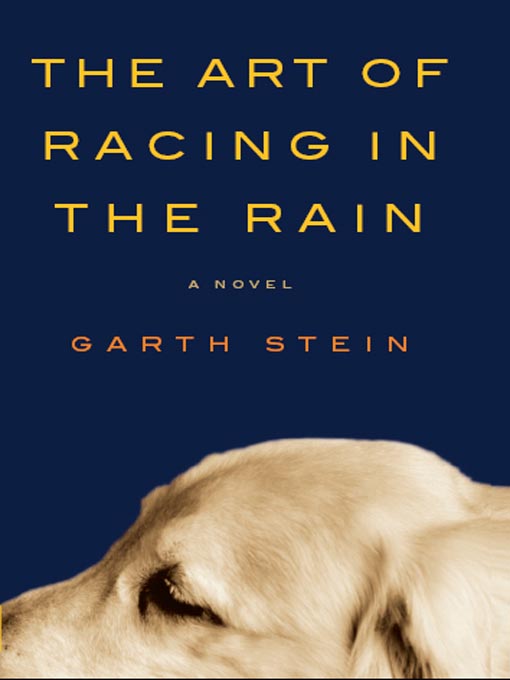
The Art of Racing in the Rain, by Garth Stein, 321 pages:
Garth Stein’s captivating novel is told through the eyes of a wise and faithful golden retriever, Enzo. Enzo is the beloved pet of Denny Swift, the struggling race car driver who understands that his dog is more than just a pet, but also a best friend. Enzo reflects on his life with Denny and the hardships that they have experienced together, the night before Enzo’s death. Living with Denny through the most trying of years, Enzo knows his owner better than anyone else. The charming canine looks at life in a philosophical manner making one wonder how much our dogs can really understand.
This bittersweet tale will leave you quickly turning pages in pursuit of the plot’s resolution. Readers who do not own a dog, such as I, will still be able to connect and relate to the recollection of an average man’s life through the honest eyes of his companion. Because Enzo lives with Denny, Enzo sees Denny in his darkest hours and his finest moments. The dog tells it like it is and doesn't try to sugar coat anything in order to make his owner appear more noble and perfect. From the devastating changes in Denny's home life to the wonderful relationship with his daughter, Zoe, the book’s strength is an even balance between happy memories and painful experiences, making it believable and realistic.
My favorite parts of the book are when Enzo relates life to racing a racecar; “Yes: the race is long-to finish first, first you must finish” (pg. 206). Stein’s ongoing theme is that friendship is important to everyone and it can come in all different shapes and sizes. This book will be enjoyed by all because it has many different elements including sports, family, love, and friendship.
Olivia M
Sunday, April 18, 2010
Lion in the White House, by Aida D. Donald, 285 pages
Lion in the White House, by Aida D. Donald, 285 pages
The Lion in the White House, by Aida D. Donald, is about the life of Theodore Roosevelt. It tells about his love for science and his families travels. In the beginning of the book it tells about his asthma and all of his other illnesses. Later on his family decides to live in
The book is very good and informative, but it does tend to jump back and forth a lot. For example it is going on about his asthma and then very abruptly it goes on about his presidency and how great he was during it. It was not that thorough of a book, it went into some details but not a lot. For example, the author spends a brief moment on Theodore’s mother. Other then that, it was a good book and an enjoyable one too.
One very exciting moment in the book is when the author tells about Theodore’s hunting trip in
The author wrote this book so people could fully understand what Theodore Roosevelt’s life was like. Also the author wanted to show Theodore’s courage, brains, wits, and heart. This book is for anyone who wants to learn more about one of our great presidents and his life.
Go Ask Alice, Author Anonymous, 185 pages
Through the eyes of a teenage drug addict, the diarists gives a first-hand view into the chaos and hell brought on by drug abuse. Horrifying yet captivating at the same time, the events as seen through the girl’s journey and her struggle with drug use shocks and compels readers, ensuring a definite page-turner. The story stays true to its subject, as it does not just show the terrifying problems of drug use, but as some would find controversial, the appeal and attractiveness of drugs. After her first use of marijuana she writes, “I finally smoked pot and it was even greater than I expected” (49). She evens writes that “After you’ve had it, there isn’t even life without drugs. It’s a prodding, colorless, dissonant bare existence” (83). However, the diary can get graphic and even disturbing at times. During some times of drugs use, the girl is sexually abused. During one especially bad trip, she scratches off her own face and tears out her hair. With such graphic detail, there are parts that may be hard to handle for some. In addition, there is also an issue with the authenticity of the book.
There is somewhat of a controversy over whether or not Go Ask Alice is really an actual diary, or whether it is a work of fiction to push an anti-drug campaign. The book almost discredits itself, making it appear more like fiction being portrayed as something it’s not. Much of the content seems unrealistic, as some of the entries and events in her life are overdramatic and exaggerated, almost to make for a better story and especially drive in the message of the horrors of drugs. Although the overall tone of the book is written like a teenage girl, the grammar and vocabulary does not match the bare thoughts one would write in a personal diary, but instead like the edited works of a person trying to write like a teenage girl. The book is slightly disappointing if it is being promoted as something its not to just promote an anti-drug campaign.
Fiction or non-fiction, the story is still compelling, edgy, and a very good read. It conveys to teens the consequences and the allure of a life with drugs. It shows there is not always a happy ending in reality and that life may sometimes be cruel and hard. Any teenager, as long as they are not easily distressed, would not only enjoy this book, but would benefit from hearing the heart-breaking story of what drugs did to a young teen’s life.
No Limits: The Will to Succeed
Phelps's story has significant strengths and weaknesses. There are quotes and sayings that I can remember to this moment that make this book stand out from other autobiographies. For example, "You can swim as fast as you want. You can do anything you want. You just have to dream it, believe it, work at it, go for it" (18). This is an extremely inspiring quote. So many athletes are put down and discouraged by their coaches. To here something as encouraging as this can really change how an athlete views their sport. I know I look at swimming totally different now, my goals are higher as well as my standards of the sport. Another very simple saying from this book, "W.I.N.: What's Important Now" (131). I often find myself in the pool during a hard practice or a at a swim meet when I just don't feel like swimming and the I remember this saying, "W.I.N." It helps push me through rough spots in swimming. On the down side of the book, it is not written very well at all. The wording and just the writing in general is very ammature. The writing could really use some help.
No Limits: The Will to Succeed has almost all the excitement of the Olympics themselves. In fact, Phelps gives us incite that we never would have known if it weren't for this book. One of the memorable chapters is the 400 Free Relay. The relays are perhaps the most nerve racking events for Micheal because they aren't entirely in his control, he must rely on three other swimmers. In the 400 Free Relay, the fourth and final man of the relay, Jason Lezak, dove into the pool behind the French. At the flip turn Jason is still losing. on the last lap Jason miraculously out touches France to win the relay by eight hundreths of a second. Almost every chapter of the book will have you on the edge of your seat, always chearing for Micheal Phelps and U.S.A.
There are many purposes or themes that Micheal may be trying to get across to the reader. one of the most important themes in this book is to never give up. Just as every great athlete, Phelps has had to deal with pressure and losing and critics. The one thing that separates the weak from the tough is mentallity. Micheal Phelps has the right mindset, as proven through this book and all his gold medals. Micheal teaches the importance of being mentally tough and determined. Giving up is not an option. This book is mainly targeted at swimmers, but it is also simply a great book for any athlete searching for a source of inspiration. If you are into the Olympics, I would suggest this book. Micheal Phelps has made Olympic history, you don't want to bet the one person out of the loop on todays greatest athlete. The book gives the reader a feeling of accomplishment. I finished the book feeling that I was bound to succeed in something great. Hopefully you will enjoy a similar experience if you read this book.
Dear John, by Nicholas Sparks, soft cover, 335 pages
This novel is about a boy, John, who is in the military and on his leave he meets the perfect girl, Savannah, at the beach of his home town. John was a “bad boy” in high school and ended up being in the military because he felt he had no other choice at the time. After meeting Savannah and getting close to her he realized that it would be hard to leave but he couldn’t resist spending every second possible with her because every second they spent together they fell more and more in love with each other. John had one year left in the military so they agreed they would wait for each other, yet after 911 John was stuck for two more years. Their relationship stayed sturdy, for a while at least. The more time they spent apart the more distant they became. It was their fist serious relationship and they didn’t know how to deal with their ups and downs, they both wanted completely different things in life, but they both wanted to be with each other.
Nicholas Sparks is an amazing author, the reader gets drawn into the book and the more you read the more interested you get. The detail he gives for every character gives you such a great idea of what they actually look like. Its such a unique story, it’s a twist to the usual love stories, but in a good way. I love how when the characters are happy you smile but when they’re sad you cry, you just cant help it. The best part of the novel is when Savannah tells John, before he goes back to the military base, to look at the moon every night so that they will both feel like they are still together and close. I definetly think that Sparks was inspired and used events from his own life to incorporate into the book. This book is obviously for both men and women but is probably more appealing to women. The novel gives you a different view on love and makes you appreciate what you have.
Nicolette B.
This book begins when FBI agent Nick Pellisante a high ranking agent catches mob boss Dominic Cavello and takes him to court, suing him for multiple murders and robberies and such. Dominic Cavello is a very powerful mob boss in this book probably one of the most powerful in the world so trying to bring him down is like when they brought down Al Capone. After Cavello is caught 12 jurors are picked and one of them happens to be Andie DeGrasse an average actress who is trying to get her career on the move she also has a young son named Jarrod. The trial seems to be going well, the witnesses are telling everything that they know about Cavello and the case seems to being going easily towards Cavello going straight to jail. They underestimate Cavellos power though because they think they have everything all set and they think the case is going smoothly when Cavello starts to blackmail the jurors. He starts off by just having his men shatter some car windows to scare the jurors a little bit. Then he goes straight for the jugular with a car bomb that kills 11 of the 12 jurors (Andie being the only survivor) and Andies son. Nick Pellisante and Andie Degrasse realize that this trial is above the law and they take the matters into their own hands.
James Patterson is my favorite writer I really love how he keeps you always on the edge of your seat. His books are impossible to put down especially this one with all its twists and turns. Every time you think you have something everything changes, it’s a really good book. Patterson’s writing is so thrilling and every story he writes is so new you wonder how he does it, but he keeps doing it over and over and I’m glad because his books are my favorite. I recommend this book to anyone who likes a good thriller and likes
This novel takes place on Shutter Island, a place with a mental institution for the criminally insane, where former Marshall, Teddy Daniels, finds himself looking for the escaped patient, Rachel Solando. The story is full of suspense and a twisting plot as Teddy runs around the island with his partner Chuck looking for the truth. Instead they find a mystery covered up by many secrets, and they find all of the flaws in Rachel’s escape.
The novel was very well written and especially the end of the book. After the psychiatrist tries to explain to Teddy his true identity and why he is on Shutter Island, Teddy has flashbacks about his real life as he falls asleep. He remembers what really happened to get him there on Shutter Island, the traumatic and horrifying events that brought him there. Teddy couldn’t live with who he really was so he created a new identity. The real effect the writing brings from the flashbacks is incredible.
The most memorable scene is when Teddy sneaks into Ward C of the mental institution, where the most violent patients are kept. Teddy comes across a patient that explains to him what is really going on at Shutter Island, all the horrors and secrets that are being kept from everyone. The dark and dreariness of the scene really adds to the intensity of the moment.
The book explores the inner workings of the greatest psychiatric role playing game of all time, trying to get a mental patient to accept who he really is. Those that really enjoy mysteries and suspense won’t be able to put the book down.
The Liars’ Club, by Mary Karr, 320 pages
In this autobiography, the author recounts her dysfunctional family and her harmful childhood. It begins with the question “Mother, isn’t that where you shot at daddy?” and continues to describe the author’s life in the south, growing up with a shift-working dad and an extravagant mother. She recalls a series of events in no particular order, beginning with the description of a fire and her mother being taken away to an insane asylum. As the author backtracks to explain the events leading up to this, we learn that although her life is chaotic, she still loves her parents greatly. Her father dotes on her and treats her like a true friend, and her mother spoils her, buying her whatever she wants. Her life is somewhat normal, until her grandmother comes to live with them while she is dying of cancer. After she passes, alcohol takes control of her mother and the author’s life begins to go downhill. At one point, she describes how her mother would spend days in bed, rising only to fight with her now scarcely-seen husband. The girl’s life is altered completely when the family packs up and moves to
This book had many strengths. The author’s use of description paints a vivid picture of her life, and her voice can be heard throughout the novel. It is dramatic, upsetting, funny, and insightful. It makes the reader realize the strength that one can posse if forced to do so, and makes on reevaluate any aspect of their own childhood they found unsatisfactory. It appears that the writer’s purpose in telling this story is to be able to understand it more clearly herself, for it includes many well though out insights as to causes and outcomes of various events. Anyone who is interested exciting and emotional stories about growing up will enjoy this autobiography, and will be able to gain a new point of view on families and childhood from it.
Love Me, Hate Me, by Jeff Pearlman, 371 pages
This biography takes the reader deep into Barry Bonds’ state of mind and the type of environment under which he played baseball. When the book begins, we are taken to one of the greatest feats in baseball when Bonds hit seventy home runs in a single season. Pearlman takes us on a journey from the time Bonds first arrived at the Pittsburgh Pirates for his professional baseball debut on May 30, 1986. By the end of his career, Bonds was named “the poster boy for everything the angry baseball fan dislikes about the modern player.” According to Pearlman, Bonds was labeled by his peers as an egotistical jerk who alienated himself by displaying a “better than everybody else” attitude. Bonds also gives Pearlman his rationale as to why money is truly the most important thing on his mind. Pearlman provides a multitude of viewpoints from fans, teammates, and other league players about Bonds and his accomplishments.
The greatest strength that this biography offers is that Pearlman interviewed over five hundred people to truly understand what people thought about Barry Bonds. As Michael Silver, the San Francisco Sports Illustrated senior writer states, “The feeling here is that he might be an ***hole drug user, but he’s our ***hole drug user.” What is most surprising about the book is how much information Pearlman extracted from Barry Bonds himself, especially since it is well-known that Bonds generally keeps to himself and does not allow reporters to get close to him. This shows Pearlman’s determination on getting the essence of Bonds and his life. Pearlman helps us form our own opinion about whether we should embrace Bond’s baseball greatness or denounce him for purportedly cheating his way to such greatness. We are able to learn what sports analysts, other big time players, and even family members believed about Bonds and use this information to make our own decisions about Bonds and his legacy. One exciting section refers to the fact that most people who are die-hard Giants fans love Barry Bonds, because he makes their team better. As Silver again states, “Barry has brought a lot of fame and glory to San Francisco.” On the other hand, other league fans despise Bonds because he makes their teams look bad. All in all, in order to truly appreciate this book, one not only has to adore baseball but, in particular, must love the San Francisco Giants.
Saturday, April 17, 2010
Seize the Night, by Dean Koontz, 443 pages
Seize the Night, by Dean Koontz, 443 pages
Seize the Night is a compelling novel, a continuation of Fear Nothing, taking place mostly at night because of the condition of the main character, Christopher. The children of the town of Moonlight Bay, California, slowly disappear and Christopher’s role in the novel is to figure out this mystery, since the police of the area attempt to hide the crimes instead of solving them. While Christopher is trying to solve the mystery, he can only work at night because of his disorder, xeroderma pigmentosum, which prevents him from going out in sunlight because of the danger posed on him, making him vulnerable to sunburn or blistering. As Chris is out in the night solving the mystery with his friends, he faces many struggles and even the death of a close friend. Finding the missing kids and solving the mystery is truly a challenge for Chris.
Dean Koontz attracts readers from the start by telling them about Chris’s rare genetic disorder. Other characters are also brought to their full potential in this novel. Suspense and the course of events make reading the book even more ensnaring. There are only more and more twists and turns as the book goes on, making it hard to put down. You read about friendship and commitment, that shows that even with a disorder that prevents one from staying in sunlight for even a second, one can do so much. It is also amazing how Koontz makes this character feel so real, as if he could be based upon a real person; none of the characters are fake at all. Although this book takes a few pages to get started, once the action starts, reading will be a blast. This is a book for those who love a good mystery or a book that you just cannot put down, but I do recommend reading the first book in the series, Fear Nothing. It is a must, as Seize the Night takes place right after the book.
The Audacity of Hope, by Barack Obama, 365 pages.

Sammy B.
The Audacity of Hope, by Barack Obama, 365 pages.
The book, The Audacity of Hope by Barack Obama, was about Barack Obama’s vision for the policies and overall system of the way our country should run. Throughout the many chapters of the book, it covered just about every important aspect of our country, from policies to race and religion. The author talked about what should be changed and left the same to better our country. This particular book is thought to be Obama’s specific plans for our country laid out step by step, this is what I thought when I first chose this book, but it’s really just a general idea of the path he would like us as a country to follow.
One thing in particular really interested me about this book, the fact that as he went on talking about the strengths and weaknesses of our country he looked at it from the view of both political parties. With my family, being republican, I thought that throughout this whole book the author was just going to talk from a democratic standpoint and I found myself to be mistaken. He talks about both the strengths and weaknesses of democrats and republicans. Another part of this book I enjoyed was when the author was talking about the oil crisis and he said, “We cannot drill our way out of our addiction to oil.” Which I found to be very true.
Although this book was a bit dull to me at times I enjoyed it because I wanted to better understand our president’s plans for our country. I think anyone that wants to know more about our future as a country will enjoy this book, especially the younger generation that doesn’t always get around to reading the newspaper or watching the news.
Friday, April 16, 2010
Marilyn Monroe, by Barbara Leaming, 431 pages.
Barbara Leaming gives a compassionate and diverse outlook on the notorious life of the woman who was known to the world as Marilyn Monroe. This book starts out with two men named Arthur Miller and Elia Kazan who were trying to produce The Hook, and their finding of a very talented young woman. It then dives into the true love triangle that Marilyn Monroe was infamously tangled up in. The books end explains the tragic suicide of Marilyn and the aftermath of those who were closest to her.
This book has relinquished unknown betrayals, excitement, and turmoil of Norma Jean’s (Marilyn Monroe) life. It is full of legitimate evidence behind every event in the book. I think Barbara Leaming wrote this book to clear up all the accusations and false rumors about Marilyn Monroe's life. After reading Marilyn Monroe I developed a whole new consideration for the difficult decisions she made. I would recommend this book to young woman and mature woman. I think from this book they would gain inspiration and fresh new ways of looking at the difficulties of life.
Thursday, April 15, 2010

Cross Country, by James Patterson, 403 pages.
In James Patterson’s fourteenth book of the fictional, action-packed Alex Cross series, Patterson once again lives up
to his reputation as a suspense writer. The compelling and vivid murder mystery following the series of Alex Cross easily pulls in anyone who reads the novel. Telling a fictional story of a conflict of Alex, a single father, who has a passion for justice. Leaving readers on the edge of their seat through out the entire moment never leaving an insignificant chapter. Showing the power of an indomitable will and justice that always prevails. I found this book to be incredibly easy to read, but at the same time have a very unpredictable ending. Patterson uses very interesting style, having the length of each chapter to be about about three pages long, making it easy to stop for a break at any time.
In this page turning thriller, Alex Cross and his girlfriend Brianna Stone investigate murders only to discover Alex’s college sweetheart has been brutally murdered by an intelligent and strategic gang. Steered by a diabolical African Warlord known by a single name, Tiger. The trail begins in the D.C. area and is carried all the way to Africa. Cross follows the trail into enemy territory to catch one of his toughest villains thus far in the series, while protecting himself without any help.

The stories depicted in the book You Have No Rights by Matthew Rothschild explore the surprising and often horrifying acts of repression and blatant disregard of rights the American government has been engaging in since the 9/11 attacks, a result of the heightened security measures the FBI and other government agencies have been implementing. The book is packed with real life accounts of normal citizens as well as visitors from other countries who were reported by coworkers, employers and complete strangers, then approached and interrogated by FBI agents for simple reasons such as reading a dissenting editorial in a coffee shop or inquiring about a job as a refugee helper in South Africa. More horrifying accounts include men of muslim origin being taken into custody by the FBI and held for months even after a court ruled them innocent from the accusation of planned terrorism. In all, this book reveals an astonishing and often brutal side of our country’s counter-terrorism measures.
In the opening chapters, it seems as if Matthew may just be another conspiracy theorist preaching about the inevitable transition to a dictatorship, but diving deeper into the book leads to a revelation; the government’s usurping of rights is absolutely real and has the potential affect any one of us. The sheer number of incidents Rothschild meticulously records in his book seems to be proof enough that these examples are not just a few isolated cases. Rothschild has done a fantastic job of collecting and reporting over eighty occurrences. Obviously, these are not the only instances. There are undoubtably a great deal more examples of the unconstitutional behavior of America’s various government agencies. Rothschild wants to explain that, though these organizations are committed to protect the population from terrorism, they have overstepped their line of authority. Even so, one cannot help but wonder if this is merely how governments need to act in times of terror. Obviously, acts of brutality and unnecessary custody are abominable and the threat should be eliminated entirely, but in times of crisis or terror the people of any nation will give up rights to maintain their own safety. The question of when a government has gone to far is one that can be hotly debated, however, and Rothschild believes that the line has already been crossed.
You Have No Rights is thought provoking and presented in a very engaging format of short stories with mixed in commentary from Rothschild. Over all, it is a fascinating and recommended read for those interested in the politics of our nation.

Stones Into Schools, by Greg Mortenson, 379 pages
Filling in the gaps in his previous book, Three Cups of Tea, Greg Mortenson describes details about his journey and his attempts to create peace and schools in the Middle East. The author begins by telling his desire, inspired by a Pakistani woman, Nasreen, to do whatever it takes in order to help her complete her education. Her strong desire to learn motivates him to build other schools for cities in need, generally for women. This proves to be difficult, for there are many risks involved. The author says, “Any teacher caught running a clandestine girl’s school was subject to executio, sometimes directly in front of her students” (74). However, the cruel consequence of helping others does not diminish the author’s determination. With the help of his partner, Sarfraz Khan, Greg Mortenson takes on the challenge of replenishing women’s’ rights, stripped away by the Taliban. He builds long-lasting relationships with the people of Islam and receives many donations to aid him in his tiring journey.
The author translates his own views and feelings into detailed descriptions, bringing the setting to life. “Kabul in the winter of 2002 was effectively a “year zero”: its population traumatized, its infrastructure destroyed, its sufferings and horrors etched upon the gray and shattered surfaces of what had once been its architecture” (79). Greg Mortenson efficiently illustrates a picture in the reader’s mind, helping him/her to see what he has experienced. As the author goes on, readers realize the importance of helping others in need. The author portrays his own determination through his volunteer work, making this the theme of his informative documentary. His passions and rewards for promoting peace inspire others to do the same. Stones into Schools is a perfect book for any reader who wants to make a difference and can use Mortenson’s descriptions to picture positive results for world peace.
Tattoo Machine: Tall Tales, True Stories, and My Life in Ink, by Jeff Johnson, 250 pages
This book is an autobiography by Jeff Johnson, who runs a tattoo shop, called the Sea Tramp, in Portland, Oregon. It is not so much of a autobiography, but more of a story which when told seems a little farfetched simply because the author has experienced so many crazy events. From realizing he has tattooed a serial killer to saving car crash victims, the author has had numerous exciting and dangerous adventures. The book tells these stories and more, as we see into the author’s childhood and get inside glimpses into the cool and sometimes bizarre culture of tattooing. The characters that come into his life, including his wife, fellow tattoo artists, customers, mentors, and the tattoo shop’s resident crazy person, seem to easily float off the page and into reality as they are deeply described, with each giving us a clear picture of who they are.
A definite strength of the book is the way the author writes, which is both vividly amazing and easy to understand, with some swearing and new tattoo terms that are explained simply. The book has a witty undertone, with humor and irony that can make one laugh out loud. The book’s only fault is the sometimes thick and difficult to understand explanations of specific types of ink, which definitely would make sense to tattoo artists but is lost to the common person. Great moments occur with the author’s humorous recollection of pranks that are played often in the shop. Johnson’s storytelling ability comes out as he describes tattooing a gang, and reading about the same gang killing twenty people the next morning in the newspaper, described in such a way that sends chills up one’s spine.
The book teaches numerous lessons in the author’s own tone, including an overall theme of hard work. The hard working people in the book, called “trojans”, are praised by Johnson, and always seem to do well in his perception. Johnson talks about his rough and depressing childhood, and although he doesn’t dwell on the subject, we see the message of conquering problems then and as he grows into a responsible adult during his time working at the Sea Tramp. This book is much more interesting than most biographies, and anyone looking for a intriguing and clever read would most definitely enjoy it.
The Poisonwood Bible, by Barbara Kingsolver, 543 Pages

Barbara Kingsolver’s novel The Poisonwood Bible portrays a harrowing tale of the guilt, love, and sacrifice that follows a broken American family through the jungles of the Belgian Congo. The story is told from the perspectives of a mother, soft-spoken and obedient Orleanna Price, and her four daughters: fourteen year old tomboy Leah Price, Leah’s crippled and mute twin Adah Price, adventurous five year old Ruth May Price, and fifteen year old fashion queen Rachel Price. The family is lead by a fiercely devout Baptist, Nathan Price, who forces the family to the Congo in hopes of spreading Christianity to the Congolese people. Arriving at their designated village of Kilanga seeing themselves better than the natives, the family soon learns that the jungle is nothing like their civilized home in Georgia. Misfortunes follow the family, and failures to win the hearts of the locals drive the Prices apart. Strict and zealous Nathan Price carries no sympathy for the Congolese people, but his daughters amazingly find that they each have a place in their strange new world. At one point, Nathan pushes to baptize the reluctant villagers. The villagers refuse due to the fact that a young girl was eaten by a crocodile in the river where Price performs the baptisms. From there on, misfortunes continue to plague the family. Orleanna falls ill, and young Ruth May is infected with malaria. As the story progresses, Nathan is informed that Belgium will soon grant the Congo its independence. Shockingly, Nathan does not allow his family to flee the country, considering that independence will lead to a native cleaning of all non-Congolese. Ultimately, Orleanna realizes the hole that the family is trapped in and weans from her obedient personality to take matters into her own hands. Orleanna attempts to get her daughters out of the country reluctant to the fact that some of the girls have already built ties to their new and strange world. This dreary teeter-totter of events leaves the reader shocked and chilled.
The Poisonwood Bible is a novel unlike any I have read before. The structure of having five different narrators worked out wonderfully. It provides the readers with five different personalities and five different points of view, proving to leave a much stronger understanding as opposed to that of a single person’s first-person narration. The only flaw I could find with the novel was that Kingsolver tended to get microscopic with the detail of things. Personally, I like a lot of detail, but too much can just get annoying and awkward for me. Other than that, the novel is a wonderful work of art. The story is told seamlessly with a cold, melancholy sort of tone, and it truly is heartbreaking. The characters were vastly diverse, each bringing a different flavor to their narrations. My favorite character would have to be Adah Price. Of the rest of the family, she is the most unfortunate. In addition to being unable to move the left side of her body, Adah is mute. What she lacks in communication skills is made up for by her eerily detailed observations and wit. Though she is mainly cynical and looks down on her life throughout the novel, I find her somewhat fascinating in the sense that she is the smartest of the family yet the quietest. In one part of the novel, Adah and Leah are sent to the river to get water. Leah, being much faster, rushes ahead and leaves Adah walking alone. On her trip home, Adah notices that she is being followed by something. She slows her pace home, hoping that whatever it is will catch up to her, before ultimately returning home. Instead of entering the house, she waits outside in the darkness, and watches terror unfold before her as a young hunter reports to the village that he has spotted lion tracks over footprints of a girl with a limp: Adah. He informs the Prices that their daughter is dead when in fact she is consciously watching in the shadows. She reveals herself as her father is delivering a sermon, and learns in the morning that the lion had killed a bushbuck in her stead. She delivers a small speech on the outcomes of life and shares a bleak outlook on God that reminded me partially about my own beliefs. Adah has several moment of wittiness and logic throughout the book that I find relates well to real life.
Throughout the novel, Kingsolver stresses the themes of arrogance and guilt. Nathan Price is utterly controlling and abusive with his family. His word is law among the women. When they arrive at Kilanga, Nathan is constantly stubborn in appealing to the locals. He refuses to have any sort of relationship with them other than wanting to share the same religious beliefs. Guilt plays a major role in the novel, especially around the climax and towards the end. Eventually, the reader discovers that Nathan was the sole survivor of his regimen during WWII after the Bataan Death March in the pacific theatre. It is the guilt not dying with his comrades that drives him to become a minister and spread Christianity. Also, near the end of the novel, Orleanna bears a tremendous amount of guilt resulting from the trauma that she was forced to put her daughters through. In the end, I was left both shocked and moved by the novel. It was different for me in many ways, and surprised me in ways I couldn’t have imagined. Kingsolver’s novel shows the readers the ramifications of clashing cultures and religions, and the physical and emotional limits a family can endure, which is sure to leave the reader spellbound.
I Hope They Serve Beer in Hell, by Tucker Max, 321 pages
My favorite of all the stories is the one where his friends and he had a road trip to Austin, TX to visit a strip club called Baby Dolls, according to the book no longer exists. The part of this story that I remember most is when they were in a Holiday Inn, his friend broke the toilet and Tucker had to go to the bathroom. So he goes down to the lobby, but he couldn’t quite make it to the bathroom and goes in his pants. He now is no longer allowed in any Holiday-Inn.
The strength of this book is that it is in first person narrative of which shows what is going on through his mind during these strange situations. But this can also be a weakness of the book because it doesn’t show how his actions affect other people in the book. The person who would like to read this book is most likely to be a teen aged male who like to hear weird stories from his friend, or a girl who has either dated or can relate to a guy like Tucker Max.

Into Thin Air, by Jon Krakauer, 432 pages
Never ceasing to excite, this interesting non-fiction account throws the reader on the summit of a mountain viewing the world from the eyes of Jon Krakauer. The large group Jon once maintained to endure this treacherous journey is subsidized, and an ultimatum is set for all climbers. All of those who do not make it to the summit by 2:00 PM have to return to the base camp no matter where they are at that point in time. Jon’s subgroup has made it to the summit by the time stated, but without any sign of the other groups. Jon remarks that he is “Incapable of feeling much of anything except cold and tired” (4). At the summit, it is clear to Jon that it was necessary to turn back, he witnessed large clouds rolling in the distance.
Obviously, Jon Krakauer has lived through this story, as he is the author; therefore, it is not too revealing to say a major theme that comes out of this personal account is the guilt of being a survivor. Another theme analyzed by Jon in many of the other climbers is their arrogance, which could ultimately be fatal for many of them. Ultimately, the themes of loyalty and friendship play a great role in Jon’s survival of this devastating journey.
Symbols play a very large part in the novel when giving us background as to how the climbers are feeling, two of the most important being oxygen tanks and camps. The oxygen tanks are not only a necessity for life in certain places, but they also provide a lot of comfort for those who carry them, sometimes driving those without them insane. The camps are vital many times in ensuring the lives of the climbers; they divide the mountain: base camp, camp one, camp two, camp three, and camp four. The camps represent a view of something large cut down into smaller steps, making it a lot easier to tackle when looking at the big picture. This novel will appeal to all of those who love action and excitement all throughout the book as Jon witnesses the effects of arrogance, and the dependence on friendship and loyalty.
Einstein: His Life and Universe, Walter Isaacson, 551 pages
The biography debunks numerous myths about Einstein, such as one that Einstein supposedly received poor grades in school. Contrary to that, Einstein actually was a consistently strong student and top of his class in all studies except languages. He struggled a little bit in his later years of university, and failed to obtain his doctorate, which is why he ended up working in a patent office when he published his special theory of relativity. One of the most memorable parts of the biography is that Einstein’s pathologist Thomas Harvey removed Einstein’s brain before the cremation and carried it around in a jar for twenty years.
Isaacson’s purpose in the biography is to share Einstein thoughts with the reader, and he is wildly successful in this. The amount of detail in almost every part of Einstein’s life is astounding. However, sometimes there is a bit too much detail. The biography often becomes entangled in the complex mathematics of Einstein’s works, of which the author is insufficiently qualified and comprehending to describe. Although Einstein: His Life and Universe is often slow and difficult, it successfully brings the reader inside the mind of arguably the greatest genius in history.
A Lost Wife’s Tale, by Marion McGilvary, 376 pages
This mysterious and romantic novel is about a woman running away from her boring, married lifestyle and starting a brand new life under a different identity. Edith, whose real name is Agnes, runs away from her husband and becomes a maid. She changes everything about her except her Irish accent and moves to
This book is about wanting to get away and go out on your own adventure. It is about the boredom of marriage and sometimes needing to get away, but eventually having to face the problem in the end. Something that draws readers in was Edith’s point of view on others’ relationships, including her own. Some parts of this book were a little dull only because she seemed to do the same thing everyday when she was supposed to be getting away from her dreary life. The author, Marion, wanted to show that everyones got a past and they can or cannot always hide from it. This novel seems like it would attract a lot of housewives and maybe not a lot of teenagers.
Tweak, by Nic Sheff, 334 pages
Tweak: Growing up on Methamphetamines, by Nic Sheff, 334 pages
This memoir, while graphic and disturbing at times, was a page-turner that was often hard to put down. Tweak is the story of Nic Sheff, a substance abuser and drug addict. This is his account of his struggles with addiction and desperation, beginning with him living on the streets, only worried about where he can find more drugs or money. It is hard for someone who has never been in Sheff’s position to fully understand what he goes through in this book, but his powerful and graphic descriptions help to give the reader an insight in to the life of a meth addict, just to name one of the drugs that controls Sheff’s life. The vicious cycle of addiction causes Sheff to hit rock bottom, finding himself with no money, no home, and no support, and this is when he realizes that he must turn his life around and get sober, which is where the real struggles begin.
Sheff does not hold back when telling what he has been through and gives detailed and sometimes explicit descriptions of the things he has seen and the people he has met along the way. These descriptions help the reader to visualize the characters and situations very easily and allow for a better understanding of the book. One person in particular was extremely important in Sheff’s life: his sponsor and friend Spencer. Spencer was understanding of the problems that Sheff was facing, as he was also a recovering drug addict. Spencer accepted Sheff into his family, helped him get a job and a place to live, and most importantly gave him encouragement and help when he was struggling with staying sober.
I believe that Nic Sheff wrote this memoir to offer his story as a cautionary tale to others. A lot of the problems that he faces are a result of his need to fit in, something that everyone can relate to. He is concerned with social status and what other people think of him, causing him to seek drugs. He also had a rough childhood and had issues growing up and as a young adult that scarred him, so he used drugs as a way to escape from reality and to hide from his life. This book is not for everyone, as it deals with intense subject matter and uses graphic language to convey the situations that Sheff faces, however it is an exceptionally told account of his life and will not disappoint any reader that can handle the truth about what a drug addict goes through on a daily basis.
Alice's Adventures in Wonderland by Lewis Carroll:166 Pages

Alice’s Adventures in Wonderland, commonly shortened to Alice in wonderland is a novel written by Lewis Carroll. The narrator follows Alice throughout her adventures in Wonderland where she meets many peculiar characters. She discovers her curiosity and need to understand the mysteries of wonderland and life, and transforms as a character.
First while trying to follow a white rabbit she falls through a rabbit hole that takes her in to wonderland. There she ends up in a great hall with a key she finds and she unlocks a door that goes to a beautiful garden, but realizes she is too big to fit. She sees a bottle labeled “drink me” she shrinks to the right size, but cannot get in because she has left it on the table. Alice finds a box labeled “eat me”, which make her grow. When this happens she begins to cry and shrink into the pool of her tears, which become an ocean. Alice meets a mouse that tells her a story that foreshadows later events in the book. Once in wonderland she meets many charters such as, the White Rabbit, King and Queen of Hearts, the Cheshire cat, the Duchess, the Caterpillar, The Hatter, March Hare and Dormouse, Griffon and Mock Turtle, and many other wonderland charters that teach Alice many different lessons and tell her many stories. The most memorable charter was the Duchess, she is a very ugly woman who at first seems very angry and rude but later becomes friends with Alice. Throughout Alice’s encounter with the Duchess she tries to teach Alice lesson on being proper and recites nursery rhymes for Alice that are supposed to teach Alice lessons. Lewis Carroll’s majors themes are the inedibility of growing up and losing one’s innocence, life and its pointless riddle.
The novel was written in the Victorian era so it may be a harder read, but very short and will not take very long to read, it is a strange fiction fairy tale. Someone who might enjoy this novel is a person who likes fiction books with many different and contrasting characters.The Shack, by Wm. Paul Young, 246 pages/Salinger, Arthur Minzener, Alfred Kazin and others, 150 page
The Shack, by Wm. Paul Young, 246 pages
This suspenseful mystery thriller, The Shack, gives a first hand perspective of an inner religious battle, by the use of a fictional character. Mackenzie, the main character, takes his children on a weekend camping trip to get away from it all. During their trip, Mackenzie feels the need to bond with his children and have a good time, especially his youngest, Missy. While others are playing in a nearby river, Mackenzie seems to lose track of Missy and finds her missing when he comes back to the campground. He frantically panics and runs to the parking lot to see a van speed off. As he is drenched in his own sorrow and returns back home to tell his wife of the occurrence, he receives a mysterious note to return to the campsite to a shack that was nearby and was signed in the name of papa. Coincidentally, Mackenzie often used this term when referring to God. He wrestles with the idea of if this is a note from God, from the abductors, or who?
This book gives a lot of meaning to what it means to be a Christian and what faith should look like. The author uses key events to show God’s intentions and even a view of His personality type. This is an inspiring book for even those not of the Christian religion. This is a good novel when you have lost something dear to you and appeals to those in a desperate time in life or in faith.
Salinger, Arthur Minzener, Alfred Kazin and others, 150 pages
In this biography/review of Salinger and his work, key observations are made about him and his novels. This book begins by saying how Salinger appears to be an invisible man. Salinger was born on January 1st, 1919, and is speculated by many to be one of the greatest authors and perhaps poet of our time. Salinger started out on a small scale by writing short stories that eventually got published in the New Yorker. But, as Salinger acquired more fame he became more and more reclusive. After the Catcher in the Ryes 3rd publication, he didn’t even want his picture in the book anymore. Also, the well known author who had regularly attended a small bar with some friends, showed up less frequently. In addition to his introverted, mysterious nature, he was also strange in that many of his sources of inspiration are unknown. Although many events in the stories can be connected back to Salinger himself, others actually happened to classmates such as the suicidal jump of a kid from his prep school. Salinger creates a more modern huckleberry Finn and explores the mind of a teenager.
Children in the Holocaust and World War II : Their Secret Diaries (by, Laurell Holliday, 432pgs)

In this book 23 young peoples diaries give insights into the hatred of the holocaust. These 9 boys and 14 girls have the same surrounding of war, but come from different backgrounds. Many of these people understand that this is their final time in the world and they will not go on. I liked the last excerpt from the brother and sister from the Lodz ghetto the most. They didn’t have any paper, so the entries were written in an old French novel. Their neighbor found this book by returning to the home and finding it. Another story told of a girl named Mary Berg who was spared death because of her American citizenship.
Most people would not read this book because of the horrors in it, but many people cannot imagine what they went through. This is a very touching and sad book, but Laurell Holliday wrote this book to give us a better understanding of the holocaust. Many of theses people had dreams and families, but where crushed by the holocaust. Even though this was a sad book I enjoyed being able to connect with characters my age. This book will make you sad, and it will move you, but it is an excellent reflection on World War II.
The Pacific by Hugh Ambrose, 489 pages

The Pacific follows the heroic adventures of five marines in the Pacific theater during World War Two. The characters range from a farm boy from Iowa who joined the navy so that he would not get drafted into the army, to a officer stationed on the Philippines who becomes a prisoner of war when the US surrenders to Japan there, to a long time soldier who had served in China with the army before World War Two before joining the marines. It follows individual soldiers through all of the most important battles in the Pacific Theater during World War Two. The battles covered in the book range from the Battle of Midway, arguably the turning point in the entire war, to Guadalcanal, to the last battle in World War Two, the Battle of Okinawa
This book does a very good job of making you feel a close connection with the serviceman by detailing their experiences very thorough. It goes to extreme detail about even the most minor of things in order for you to best relate to the soldiers and understand how they are feeling. It describes the scene in the novel so well that you feel like you're getting soaked with the marines at Cape Gloucester, or feeling petrified with the marines in their foxholes on Peleliu. "The enemy that the marines could not kill or capture was the rain. It drilled them relentlessly". Description like this runs through the entire book, letting you get a very in-depth feel for how the servicemen are feeling throughout the entire book, making it a very interesting story.
Hugh Ambrose set out trying to describe the servicemen's experiences as best he could, to show how the soldiers felt about what they were doing while they were doing it, and he does an extremely good job of it. He also sets out to show that war is not all brave and courageous acts, but also horrible things that would normally break the morale of a normal man. He describes the war in such a way that he still glorifies heroic acts while making sure that the reader understands that war is brutal and unforgiving. Even with this he tells the story very well of five people who served their country valiantly, bravely, and courageously. This book is for anyone who has a remote interest in World War Two, or who is interested in the struggles that soldiers are put through in times of war.
Occupation Skateboarder by Tony Hawk 304 pages

The overall events of this biography were outlining Tony Hawks’s life as a kid, and his career as a young skateboarder growing up into being one of the most famous and best skateboarders ever. I would definitely recommend this book to a kid that doesn’t really enjoy reading because it is an easy read, and there are many humorous events that take part in the book.
Catching Fire by Suzanne Collins
 This suspenseful novel is the second book in The Hunger Games series, and keeps you waiting for the third. Suzanne Collins shows us a society with absolute monarchy, divided into 12 individual districts and a capital. President Snow, who rules the society, uses fear and power without mercy to keep order throughout the districts. Katniss Everdeen lives in the 12th district which purpose was to mine coal. Each year the President reminds the citizens of whom they are ruled by in order to keep control. Two tributes from each of the 12 districts are drafted into fighting each other to the death in the hunger games, as everyone back home is forced to watch their friends and family killed on television, or if they are lucky, brought home as the winner. In the last book, Katniss is forced to fight, in the end tricks the capital to let her and her fellow tribute both be winners, saying that they are madly in love and would rather kill themselves then kill each other. Needing a winner, the capital is forced to let them both come home.
In this novel, the president is furious and wants revenge. Katniss has shown everyone that the capitals rules can be broken. Rebellions form and the capital have to use force. A civil war has begun and it has a little twist to it. Suzanne Collins shows us what it would be like to live in an unstable government and the importance of working together in order to survive. If you’ve read the first book, the Hunger Games, then you don’t need convincing to read this novel. If you haven’t, I highly recommend reading the series if your into rebellion and violence. If you don’t mind a little bit of a love story thrown in, then this series is perfect. This isn’t the end either; there will soon be a third. Suzanne Collins, write faster!
A Pitcher’s Story: Innings with David Cone, by Roger Angell, 290 pages
Roger Angell’s book includes Innings with David Cone in the title, but really the book describes every major league baseball pitcher. The book vividly describes David Cone’s life beginning with his discovery of baseball. Everything began with David’s first coach telling him to never throw anything without aiming at something. David was a bit of a journeyman in the Major Leagues. He traveled to lots of different teams and sometimes returned to a team he had left. He was friends with many of the other pitchers in the league and feared by many of the batters. On July 18, 1999 David Cone became the sixteenth player in Major League baseball to pitch a perfect game. Many non-baseball fans have no idea what this means: throughout the game David never gave up a hit, a run or a walk, essentially no one on the other team ever touched a base.
Roger Angell is clearly a huge fan of the game and also of David Cone. He did very in depth research of David Cone and found out about everything from his beginnings as a child prodigy to his World Series Championships. David was the spokesperson for the Players Association during the hardest weeks of the players strike. This was not a good time for the players because the fans started thinking of them as greedy but Angell makes it clear that Cone was not in this for the money. Despite the fact that he gained a reputation as a “hired gun” due to his short contracts Cone was always there to play the game not just for money.
A Pitcher’s Story is a well thought out biography of one of the greatest pitchers in the 1990’s. You don’t have to follow baseball to enjoy this book, I am not a baseball fan and I enjoyed this book.
-Naddy W.
Youth in Revolt
Youth in Revolt, by C.D. Payne, 437 pages
It was difficult to read Youth in Revolt just because I could not help myself from laughing out loud after reading just a few sentences. Youth in Revolt is the hilarious diary of the precocious Nick Twisp, a teenage boy whose goals in life are to lose his virginity and win over the girl of his dreams. Although meant for adults, it is a great read for any teenager, who can immediately relate to the musings of narrator Nick Twisp and the descriptions of his dysfunctional family, friends, and school life. Because the book is meant for adults, I thought it was a better read then it would have been if written for teenagers simply because the literature was not censored so as to be more appropriate for the reader. Youth in Revolt takes place in the east bay, so while reading it I was glad that I could identify and visualize the places which were spoken about.
The book begins with Twisp describing his mother and her beer-bellied truck driver boyfriend, and his egotistical father and his nineteen year old girlfriend. After being taken hostage to a vacation in an R-V camp with his mother and her boyfriend, Nick meets the girl of his dreams, Sheeni. So begins his infatuation with her, and after leaving for home, Twisp begins plotting ways to get closer to Sheeni, who lives two hours away from him. The things Nick does for ‘his love’ are fantastically outrageous and funny all on their own, so that one will find themselves rallying behind Nick and his cause. Youth in Revolt is a book that is impossible to put down and readers will find themselves laughing out loud in embarrassingly public settings. After reading this book, I was able to understand (kind of) what it is that teenage boys are thinking of most of the time (food, sex, their penis) which gave me more insight as to why boys do what they do. Yes, a movie was made which is based on the novel, which I have not seen but plan to do in the future. I recommend this book to anyone who wants to read an entertaining and wittily humorous narrative, and i especially recommend reading this book before seeing the movie simply because it will better one's appreciation of the actual story.
Tangerine by Edward Bloor

I think that the writers purpose on making this book was to show a number of things like showing how its hard to fit into a neighborhood after moving across a country. I think that a memorable event was when the sinkhole was as Pauls school because it gave him a chance to move to a new school and play soccer. Also how it’s hard to do what you love to do, even if its not easy. I would recommend this book to anyone that likes a good mysterious book.
Up Your Score, by Larry Berger, Michael Colton, Ginger Jiang, Manek Mistry, Paul Rossi, and Jarey Wang, 327 pages

Do not be at all scared by the fact that Up Your Score is 327 pages. In fact, by the time I finished the book, I was surprised that I had flipped through so many pages. This book does a very good job at what it aims to do: write an SAT prep book that high school students cannot stop reading. This book covers everything a teenager needs to know to have the confidence they need when they sit down and take the dreaded SAT. From numerous mental tricks, to key vocabulary, to math multiple choice strategies, this fun book actually almost made me excited to take the SAT. For example, in an attempt to help the reader remember the word crestfallen, an example sentence was included. "'I'm sorry I dropped the toothpaste,' he said, crestfallen." The six authors themselves are very interesting, and are great role models. They seem to really know what it is like to be a high schooler, and are very down-to-earth. They all accomplished great things with their life, and they all have a desire to inspire high schoolers all over to do great things with their life, and it starts with the SAT. It is obvious that the authors of this book (who all got 2400s on the SAT) spent countless hours studying different SATs and the nature of the questions. I believe all high schoolers would benefit from the authors' discoveries, and should feel slightly ashamed of themselves if they do not take advantage of their "research."
-Tyler S.